Breaking the Cycle: How Nutrition Education and Home Gardens Transform Lives
By Dr. Jim Barlow, Agronomist, Soil Expert, and Seeds for a Future Board Advisor
There's a chronic nutrition and malnutrition crisis in rural communities across the highlands of Guatemala.
At Seeds for a Future, we address malnutrition every day through home gardens, education, mentorship, and practical tools to guide families in building their own sustainable, nutritious food security and improving their health.
A recent study published in BMC Public Health examined dietary patterns among Guatemalan Mayan children living in food-insecure households and described the scope of chronic malnutrition in stark terms. The study found that stunting affected 53.5% of the children surveyed, and 81.9% of them lived in food-insecure households. Many children were consuming highly monotonous grain-based diets with low intakes of key nutrients, including deficiencies in omega-3 and omega-6 fatty acids, calcium, and choline.
The quality of diet matters because malnutrition is not always the same as starvation.
Children may consume enough calories to feel full, yet still lack the proteins, healthy fats, vitamins, and minerals needed for normal growth and development. Diets built largely around cereal-based drinks, corn-heavy meals, and processed foods will often leave children undernourished, affecting their bodies, learning, and long-term health.
The earliest years of life are especially important. Seeds for a Future places strong emphasis on the First 1,000 Days, from conception through infancy, because poor nutrition during this period typically has lifelong consequences. At the same time, our work continues with families raising children through the school years and adolescence, when nutrition still plays a major role in physical and cognitive development.
We don't approach nutrition as a list of warnings. Instead, we approach nutrition as a body of knowledge for families to use, apply, and pass on to their extended families and communities.
Nutrition Education Begins with Understanding
When a family joins our program, we begin by listening and observing. Our team assesses dietary patterns, health needs, household conditions, and gaps in nutrition knowledge. The assessment helps us understand what is missing from the family's diet, and what's practical to grow, prepare, and sustain within the space and resources the family already has.
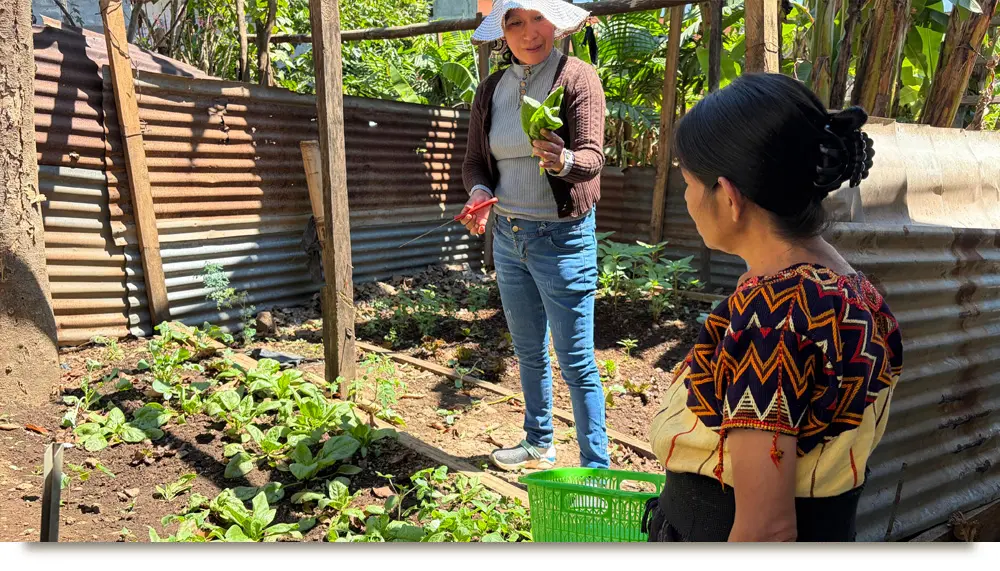
After getting to know the family, we help them design unique home gardens to grow healthy, nutritious food for their household.
We focus on varied gardens to diversify the family's diet, improve their health, and enable year-round harvesting through organic and permaculture-based methods.
Families are trained and mentored in gardening and informed about why what they're growing matters. Our field team members explain the roles of carbohydrates, proteins, fats, vitamins, and minerals in the body and how different foods support healthy growth and development. We want families to understand the science behind nutrition in ways that are practical, accessible, and empowering.
The nutritional knowledge we impart to families creates a shift. Food is no longer seen only as something to fill the stomach. Instead, food becomes something that protects health, supports children's development, and strengthens the household as a whole.
Relearning the Value of Fresh Food
An important element of the Seed's training is reconnecting families with the nutritional value of fresh, homegrown foods, including traditional foods that may have become less common as processed products have become more available and convenient. Seeds for a Future helps families understand not only what processed foods often lack, but also what nutrient-rich greens, vegetables, and other garden foods can contribute to daily meals.
As families learn what complete nutrition looks like, they also begin to see the broader value of home gardens. Fresh food from the garden improves dietary quality and reduces dependence on purchased foods, while freeing up limited household income for other needs such as education, clothing, and essentials.
Our field team members mentor participating families through regular visits, practical demonstrations, and teaching materials developed by our founding agronomists. In this way, education is not separate from the garden. It grows alongside it.
Nutrition, Sanitation, and Family Well-being
Good nutrition doesn't stand alone. A family's well-being also depends on sanitation and access to safe water.
Our work includes practical education around hygiene, handwashing, safe food preparation, and the use of household water filters. Clean water helps protect the health gains families are making through better nutrition, especially for young children who are more vulnerable to illness and its effects.
Food security is more than just food. It's knowledge, health, and confidence, and the ability to sustainably execute this knowledge day after day, season after season.
Education That Lasts Beyond One Season
When Seeds for a Future begins working with a family, the goal is not just short-term improvement. The goal is lasting nutrition self-reliance.
As parents learn the science of nutrition and the practice of growing nutritious food at home, they gain more than a garden. The parents gain confidence as caregivers and decision-makers. They begin to understand not only what their children need, but also how to provide it in practical, sustainable ways.
Their children grow up seeing what care, consistency, and healthy food habits look like. They experience better nourishment, stronger routines, and a model of family life rooted in action and possibility.
Once families understand the why behind the work, they are far more likely to keep their gardens going, share what they are learning with others, and carry the knowledge forward into the next generation.
At Seeds for a Future, nutrition isn't treated as abstract theory. It's taught as practical knowledge that can take root in a garden, at the table, and in the daily choices families are making for their future.