“Pass the Plate, Improve Community Health!”
From mountainsides to lakeshores across Guatemala, families in the Seeds for a Future program are doing something quietly radical: growing their own food, on their own terms.
In backyards and borrowed spaces, in repurposed fish tanks and stacked recycled tires, families are finding creative ways to nourish themselves and their communities. A woman in Montecristo reaches for spinach instead of diabetes medication. A mother who survived cancer tends a garden so her daughters have a reduced risk of getting sick from pesticide-contaminated food.
In Chocolá, our headquarters near the Pacific coast, a family that received a single blackberry cutting six months ago is now harvesting, selling the fruits of their labor at Q.10 ($1.25) per pound, and making ice cream from the surplus. These families are not waiting for solutions to arrive; they’re building them, plate by plate, seed by seed. Seeds for a Future walks alongside them, offering tools, knowledge, and a connection to others doing the same.
Eating Well is a Right, Not a Privilege: Growing Nutrition from the Ground Up
Eating well should be a universal right, but in practice, access to nutritious food is shaped by forces far beyond any family's control. Global markets treat food as a commodity, distributing the best options according to purchasing power rather than need. Cheap, calorie-dense, nutritionally poor food dominates what is available and affordable for most families. Fresh, organic, and diverse food, the kind that truly nourishes, remains out of reach for the majority.
At Seeds for a Future, we believe this doesn't have to be the case. Week by week, we work alongside families to make nutritious food available across rural Guatemala, beginning in their own backyards.
Our nutrition garden program provides families with the seeds, materials, and hands-on technical assistance they need to grow their own produce. But the work goes deeper than gardening and small animal husbandry. Lasting nutritional change means transforming not just what families eat, but how they eat, what they believe about food, and how they care for their own bodies.
Organic Is Not a Luxury. It's a Need.
Participating families understand firsthand why organic growing matters. In April, Candelaria, one of our Field Team members, shared that families in the communities she serves are increasingly worried about rising rates of cancer in their area. Many connect this directly to the pesticide-laden, chemically grown produce available in local markets, which are being grown close to contaminated water sources and soils. As Candelaria explained, "Families want food that is safe to eat. It doesn't matter that the vegetables are smaller than the ones found in supermarkets; people fear contamination."
For these families, growing organically is not a trend or a premium lifestyle choice. It is a response to a health crisis they are living through. They choose to work with Seeds for a Future to put that solution directly in their hands.
Variety Is Nutrition
The human body requires at least 45 essential nutrients, and no single food can provide them all. Dietary variety is a culinary pleasure, but, more importantly, it is a biological necessity. That is why families with the Seeds for a Future program are introduced to a wide range of vegetables and fruits through the gardens, many of which families are encountering for the first time.
This month, families in several communities joined together to experiment with eggplant: grilled, roasted, wrapped in egg, and prepared in soup. The collective experience became something much bigger than a cooking lesson. As one extensionist shared, "Everyone loved the new foods. They had never tried eggplant before, and it became a wonderful opportunity to motivate neighbors to join the program as we shared the meal together."
That moment captures something essential about how change takes root: not through instruction alone, but through sharing, curiosity, and the simple pleasure of a good meal.
Experiencing Food as a Community
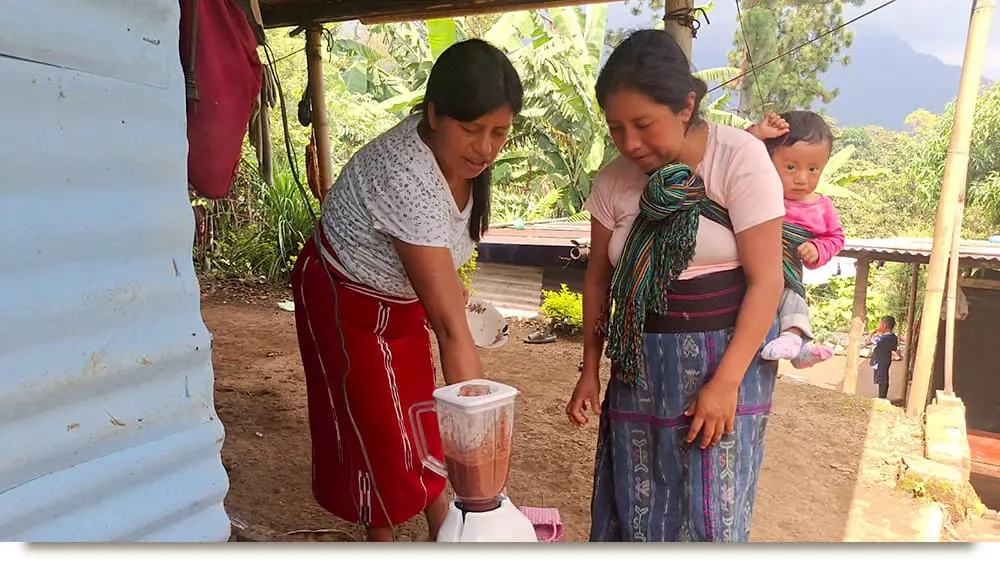
Across our program communities this month, cooking became a gathering point. In Santa María Visitación, families came together to prepare and share cauliflower soup. In Chocolá, eggplant took center stage in multiple preparations. In Pochol, one of our Field Team extensionists used garden vegetables to make natural juices and medicinal herbal preparations. In Montecristo, families with high blood sugar levels were introduced to spinach recipes and learned about the blood-sugar-regulating properties of plants like the nightshade herb, which is a reminder that the line between food and medicine has always been thinner than we think.
"We have plants for both eating and healing," one participant shared. "Oregano and rosemary are condiments, but they are also medicine. We use oregano to relieve pain from varicose veins."
This kind of knowledge, rooted in lived experience and passed between neighbors, is exactly what Seeds for a Future works to nurture and expand.
Growing More Than Food
Home gardens are transforming the way families understand and care for their own health. Beyond our Field Team Extensionists carrying agricultural knowledge, they carry a toolkit for lasting change. Every recipe shared, every new vegetable tasted, every neighbor who joins the program because they saw something growing next door, is a step toward a future where eating well is not a privilege reserved for the few, but a reality rooted in every home.