
The Four Pillars for Reducing Malnutrition Among Indigenous Families
Rural Nutrition and Health Requires More Than Planting Gardens.
Since 2009, Seeds For A Future has been refining and evolving the design of its core Program, which focuses on food security, nutrition education, and increasing incomes.
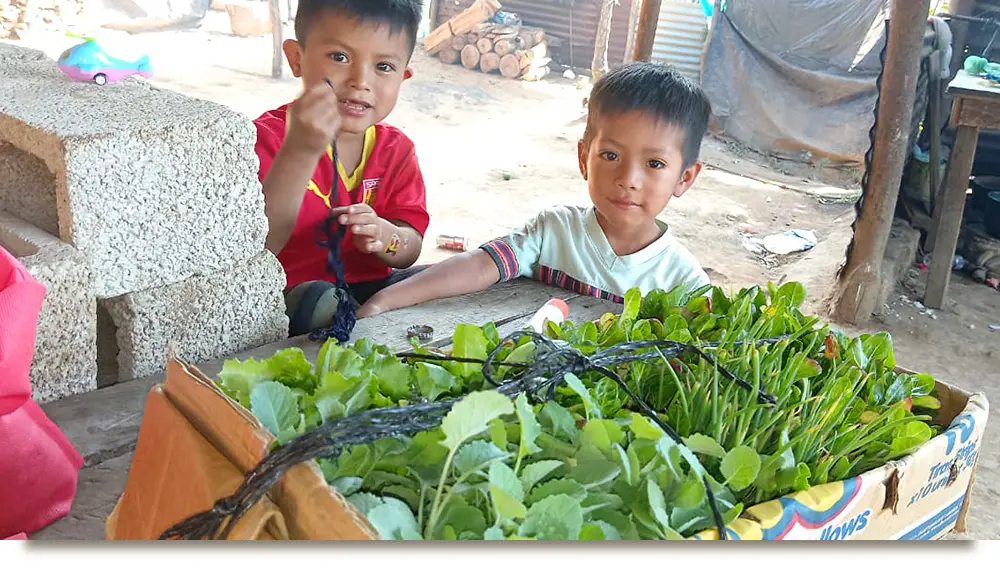
The concept of the Seeds Program began when its Founders, Suzanne and Earl de Berge, were living in a Guatemalan town with a large Indigenous Mayan population. What was unnoticed from the outside became strikingly clear from the inside: 70-90% of Mayan babies and young children were experiencing the physical and cognitive impacts of stunting, placing an extra burden on mothers, families, and communities.
Identifying the Root of the Problem
Newly aware of the chronic and severe stunting struggles, Suzanne and Earl researched rural families' dietary habits and discovered that they were subsisting on an inadequate, poorly balanced diet of processed foods and sugary drinks.
The core of the problem was malnutrition rooted in chronic deficiencies of proteins, vitamins, minerals, and healthy oils; a diet often associated with lower household incomes and/or a lack of nutritional education.
The families most affected lived with significant economic constraints and limited access to consistent nutrition education and to affordable, high-quality food options. These structural barriers shape long-term health outcomes and opportunities for the next generation.
It would take collaborative, locally-led action to build a sound solution.
Beginning with a tactful inquiry into the cultural patterns at play to define the problem, it became clear that malnutrition is a nationwide endemic, affecting millions of families, especially in rural communities. Perhaps, with a community-led approach to empower families, they could become self-reliant and improve nutritional outcomes through knowledge and their own actions.
Understanding the Solution
The core idea for a program stemmed from the observation that Mayan families did not widely practice home gardening as a primary means of nutrition. The Seeds for a Future approach would be to encourage families to empower themselves by establishing intensive regenerative gardens around their homes.
Gardens are a leading approach because they can be replanted continuously in a staggered rotation, so there is something nutritious ready for harvest every day of the year. In theory, regenerative gardens tended by families can build self-reliance by enabling them to feed and raise healthy children.
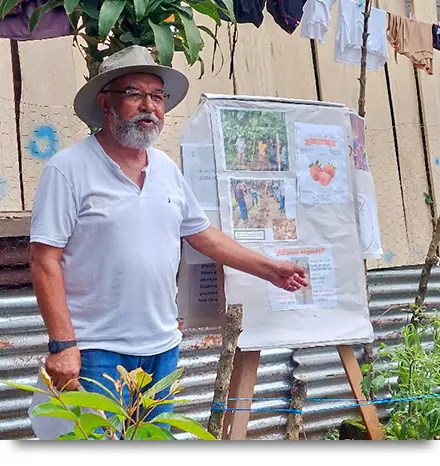
In welcoming Program Director Armando Astorga, the local team identified regenerative home gardens as a significant tool in the fight against endemic malnutrition, but they found that people could not just run with the idea on their own. More was needed in terms of program elements and design to provide the other support essential for enthusiastic and successful adoption by the families. It still needed a basket of additional support activities to make it a program that participants would embrace.
Additional program design and support questions included:
How would the program be introduced to families in need?
Who would be the face of the program?
What languages and dialects should be spoken?
In what ways were the people disempowered that stopped them from taking the first steps?
What other support activities were essential to the adoption and continuing participation in the program by the people?
In all, what would be the comprehensive design of a self-help kitchen garden program that would work to stay popular and grow to reach thousands of families over time, rather than be another failed attempt at aid?
Building Sustainable Rural Nutrition and Health: The Four Pillars
Pillar One: Layered Nutrition Education
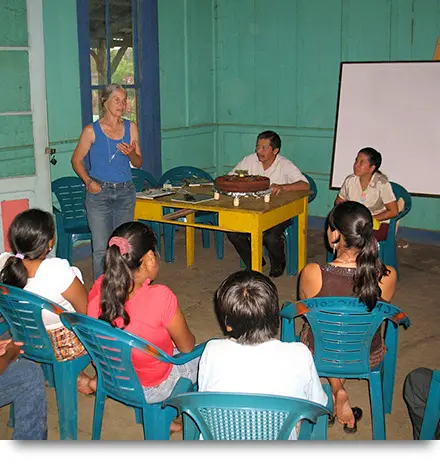
The first pillar is to be educators. Families signing up for the program should learn about various aspects of nutrition so they may understand how processed foods and sugary drinks are not adequate fare and lead to an incomplete and unbalanced diet. Over time, the local team, listening to feedback from program members and applying their expertise, refined a curriculum and teaching materials that families learn from and use as guides. Today, Nutrition Education serves as the first pillar of Seeds for a Future.
Pillar Two: Building a Successful Team of Experts
Team building, training, and sustained mentorship, delivered with dignity, respect, and care, form the foundation of this second pillar. By building and supporting a trained team of advisors, ongoing personalized mentorship is provided to families. Early on, we learned that while families clearly saw the value of regenerative gardens, information alone was not enough to overcome the complex barriers they were navigating.
Many families desired to grow more of their own nutritious food but expressed the need for hands-on mentorship, with someone to visit, encourage, problem-solve, and support implementation in ways that fit their unique context. In response, Seeds for a Future refined its approach to building a strong Field Team by investing in thoughtful training, a clear scope of work, and ongoing support.
Pillar Three: Planting Regenerative Gardens
The third pillar of our program is our commitment to teaching and promoting permaculture and regenerative gardening in ways that are accessible, culturally relevant, and empowering for the communities we serve.
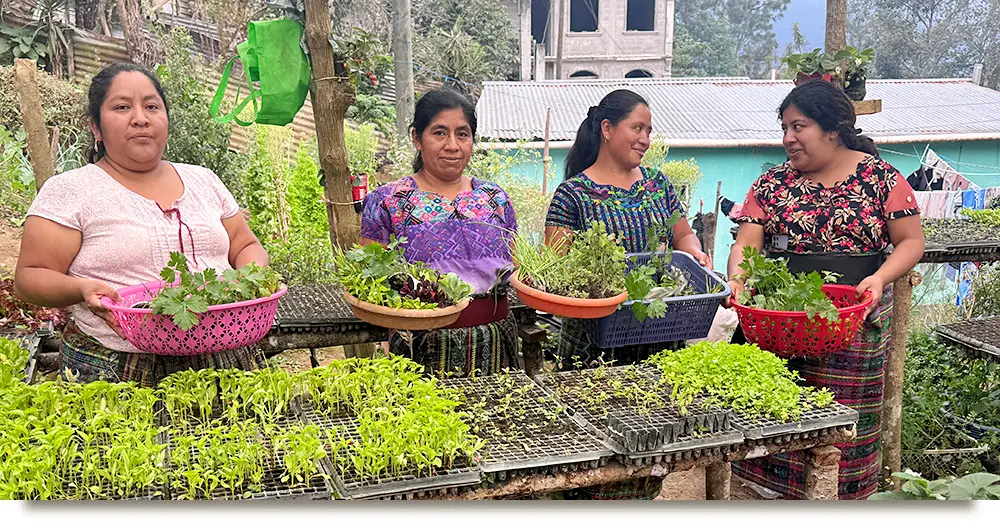
Implementing a solution to malnutrition disease through the sharing of deep horticultural knowledge, guided by environmentally healthy principles. Planting regenerative gardens at each program member's home is a core pathway to improved nutrition and resilience, as it couples understanding the problem (malnutrition disease) with a solution (fresh nutrient-dense produce and proteins) right at their fingertips. We are committed to ensuring they are thoughtfully designed, diverse, productive, and sustainable year-round.
Strong, lush gardens require both practical skill and ecological understanding. By cultivating advanced expertise within our team, including principles aligned with Master Gardener–level knowledge, we support gardens that flourish in each family’s unique context.
Pillar Four: Connecting and Building Trust within Communities
Our fourth pillar is community building practiced with intention, inclusion, mutual respect, and shared leadership. The families we partner with are part of vibrant villages and towns shaped by relationships, shared knowledge, and mutual support. Neighbor networks, extended family systems, and informal collaboration already form a strong social fabric.
At times, migration reshapes family dynamics, and communities are forced to adapt with resilience. We approach this reality with humility, not to replace what already exists, but to contribute thoughtfully and strengthen what is working.
Our role is to walk alongside communities in a spirit of partnership. Through regenerative gardens and mentorship, families strengthen household nutrition and often cultivate surplus produce to share or sell. Just as importantly, engaging with respect, inclusion, and consistency contributes to connection, collaboration, and long-term stability.
Each of the four pillars above is its own book of knowledge, grown from our Field Team’s lived experience, which we've documented and continue to work from.
Our solution of regenerative permaculture gardens to supply missing nutrition is the “what” of what we do.
Taken together, our four pillars are the “how” we do it.
They are how we do what works; it takes much more than just recommending that people can grow their own nutritious food in a garden outside their kitchen door. It takes the right kinds of personal attention and sustained presence in a community to start adoption and then see long-term, enthusiastic participation in the program.
Impact Lived Daily
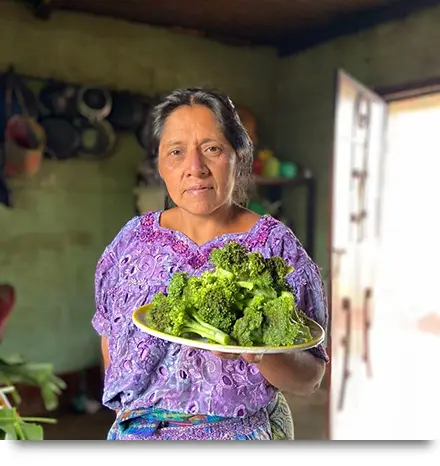
The success of a garden program can be seen when visiting the families. Parents are now able to talk about sustaining good nutrition, and how they are able to provide for their family through garden spaces they own and tend to themselves.
Families exude pride and enthusiasm for their newfound self-reliance, free from processed foods bought in stores. There’s a surplus of produce being shared with extended family or neighbors.
Surplus food is being sold to generate a new source of income and improve household income. A comfortable and trusting relationship is nurtured between the families and our highly trained team members who visit each week to help the gardens succeed.
Over time, trust has grown. Families speak of the value of consistency; that our local team remains present season after season. That sustained partnership is what turns gardens into a source of long-term resilience. That is why families embrace the Seeds for a Future program, and why it is growing by word-of-mouth to empower families, fill stomachs, and build bodies and minds.