How Long does it Take to Grow?
Notes from recent reports from the field team.
At the end of July, Catarina T. was preparing her first permaculture garden in Pasac, Guatemala.
Space around her home was limited, so Catarina worked with Field Team member Julia and a practicum student to make use of what was available: reused containers and bags. Together they prepared the soil with tree litter, lime, and ash before Catarina planted cucumber, celery, broccoli, Swiss chard and hierbamora, a leafy green used in local cooking.
One month into the Program, Catarina gathered her first harvest: Swiss chard and, very soon, hierbamora. Her cucumber, celery, and broccoli will need more time in the soil before they are ready.
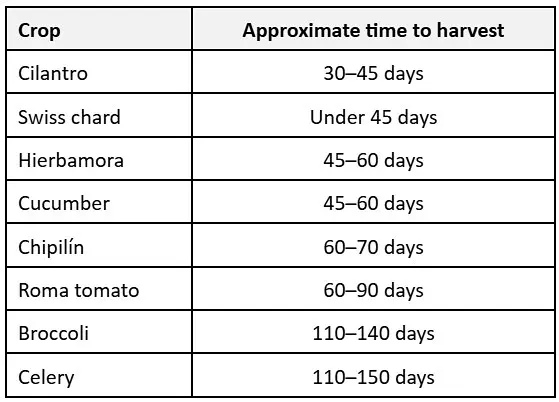
Growing Times for Permaculture Garden Crops in Guatemala
Plant variety, soil, weather, local growing conditions, and whether a crop begins from seed or transplant can all affect growing time between planting and harvesting. The Field Team supplies seedlings raised in community nurseries, so many Program members begin with good-quality transplants and see results sooner.
Our Guatemalan Field Team shared these general ranges:
The team will follow up in a few months to see how her other crops are doing. They've already discussed the next step with her: preparing soil for a second growing area in front of her home.
Progress Looks Different at Every Stage
Two other noteworthy families in the month's reports are harvesting as well.
In Santa Bárbara, Sebastiana harvested about 55 cucumbers in one month. Cucumbers are often used in side salads such as ensalada verde (see recipe below).
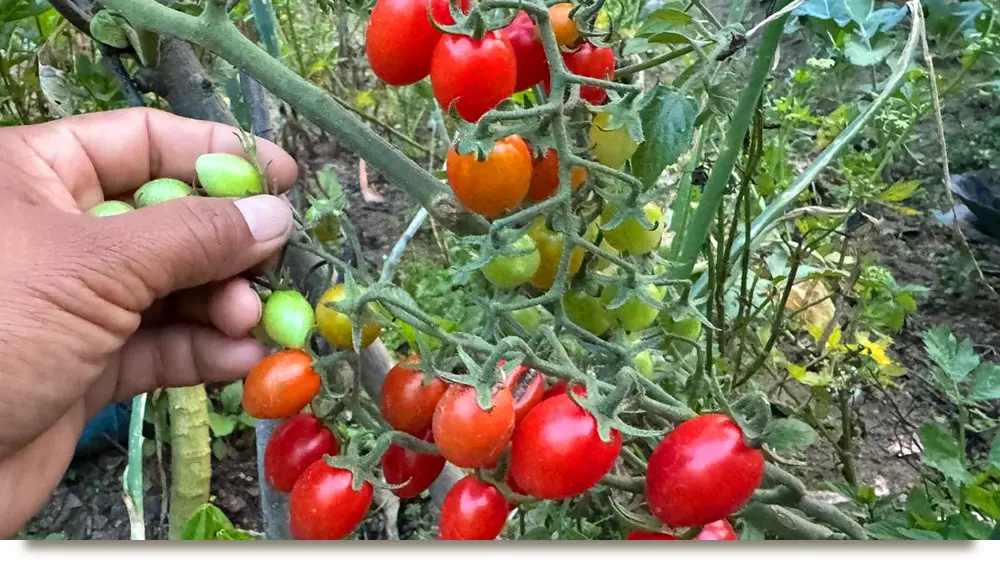
In Chwi Santo Tomás, Elena Y. watched her tomatoes ripen on the vine and trimmed chipilín and cilantro for her family's daily meals. During the same site visit with the Team, Elena prepared another bed with organic materials and planted new seedlings.
Harvest is what everyone is working toward, food to eat, and share at a family meal. Preparing the soil, planting and tending is where the whole family works together and puts what they are learning into practice.
Over time, that repetition is part of how practical knowledge becomes a learned skill.
Why the Program Takes Time
Seeds for a Future's Program is a 12-month, hands-on mentorship with regular training and follow-up site visits. Families put what they are learning into practice at home, observe the results and work through challenges as they arise.
Knowing that Catarina received seedlings tells us one thing. Returning a month later and documenting what she has harvested shows what is actually growing well in that environment.
Sebastiana's cucumber count means more because we can set it against what her garden produced earlier. Elena's next planting tells us more because we can also see what she is already harvesting from the space she has been tending.
These are practical markers of progress. Together they show how food security can develop over time through knowledge that is practiced, adjusted and used again.
The Field Team stays close to that process. Members return to observe what is growing, troubleshoot problems, introduce new practices and adapt their guidance to the conditions at each home. Families make the decisions and do the work of putting that knowledge into practice.
There is rarely a moment when learning is finished.
What Comes Next is Already Underway
The latest reports gave a glimpse of where the learning goes next.
At Clemente’s home, the Field Team established an experimental radish bed to compare different soil treatments. The question is straightforward: test the conditions, observe the results, and learn from what grows.
Clemente's home is also scheduled to host a community field day where neighbors can see the results for themselves.
Catarina's first harvest shows how the Program moves forward. What begins with preparing soil and planting does not stop when the first chard leaves are picked. Families continue tending, learning, and deciding how much labor, water, and natural fertilizer to put into their gardens.
Harvest times vary, and patience can run short in a household that averages 7.8 people; that’s a lot of mouths to feed. One of the most useful measures of progress that keeps us going is that Program members keep recommending the Program to their neighbors.
Recipe Time!
Ensalada Verde:
Serves 10
4 bunches fresh watercress
2 bunches spinach
1 small red onion
1 bunch very fresh radishes
2 green-skinned cucumbers
Wash and disinfect the watercress and spinach well. Wash and disinfect the radishes and cucumbers. Remove the spinach stems and use only the leaves. Use the tenderest sprigs of watercress and discard the thick stems. Slice the radishes and onion. Score the cucumbers lengthwise with a fork, then cut into rounds. Toss everything in a salad bowl and season with dressing to taste.
Help Sustain the Work Behind the Harvest
Your support helps sustain a year of hands-on training, mentorship, follow-up and starter resources as families put new knowledge into practice and decide what works in their own gardens.
About Roots of Success: Each month, this series is built from weekly field reports documenting the work of our Guatemala Field Team and Program members. This edition was compiled by Vivien Varga, Marketing Manager, from reports written by Moisés Pastor Morales, Program & Data Manager.