From Seedling to Supper: Five Highlights from the Field Team in September
Every week, our team of extensionists, nursery growers, and student interns sends in a report from the field. Last month, those reports told the story of a season of rain, hard work, and good harvests across Guatemala's Pacific coastal lowlands and western highlands.
Below are five highlights from September capturing what Seeds for a Future is all about: families growing healthy, chemical-free food with what they already have at home.
1.) A Field Day that turned a family farm into a classroom
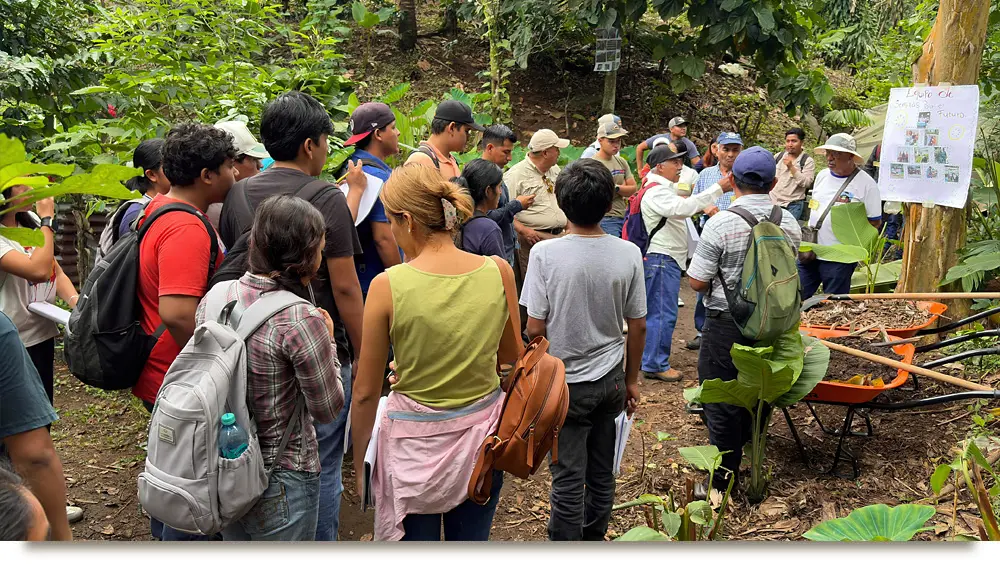
On October 2, 38 people gathered at Program Member Don Clemente Álvarez's land in Chocolá for a community Field Day.
Students, participating families, community representatives, and our partners rotated through five hands-on stations: Biodiversity, Cropping Systems, Fruit and Timber Trees, Integrated Home Gardens, and Microorganism solutions for soil regeneration.
The team had been preparing for weeks, from finishing a tilapia pond to brewing a batch of Microorganism solution with cane sugar, forest soil, and potato. Student intern Brayan's station showed how chili, garlic, and onion make a natural pest repellent with no chemical residue.
The day closed with tortillas, chicken, and a refreshing moringa drink, rich in iron and vitamins. Families who completed a full year in our program received diplomas, and participants Micaela and Manuela shared how the project has changed their communities. Our interns Blanca and Justin are already planning a Field Day next month.
The best measure of a garden is what ends up on the plate. In Pacanal, Doña Candelaria told us her family has spent less at the market for three months running thanks to her tablón. In Santa Bárbara, Don Edwin harvested squash, and his wife cooked it with beans for the whole family.
Many families are now selling their surplus, too. Doña Elena in Xetulul sold her excess cabbage heads at Q12.50 each ($1.75 USD), and Doña Elena Yaxón in Chui Santo Tomás brought in her fourth straight chipilín harvest, trading it for beans. In Pasac, Doña María de Jesús sells ruda at Q10 ($1.25 USD) a bunch and chipilín at Q5 ($.63 USD), and harvested about 70 pounds of yuca root (cassava) from a single plant.
Generosity grows here as well. One participant shared her chipilín, a nutrient-dense leafy green, with neighbors at a gathering in her home, and our team in Santa María brought fresh chipilín from the demonstration plot to Doña Isabel, a 95-year-old neighbor in need.
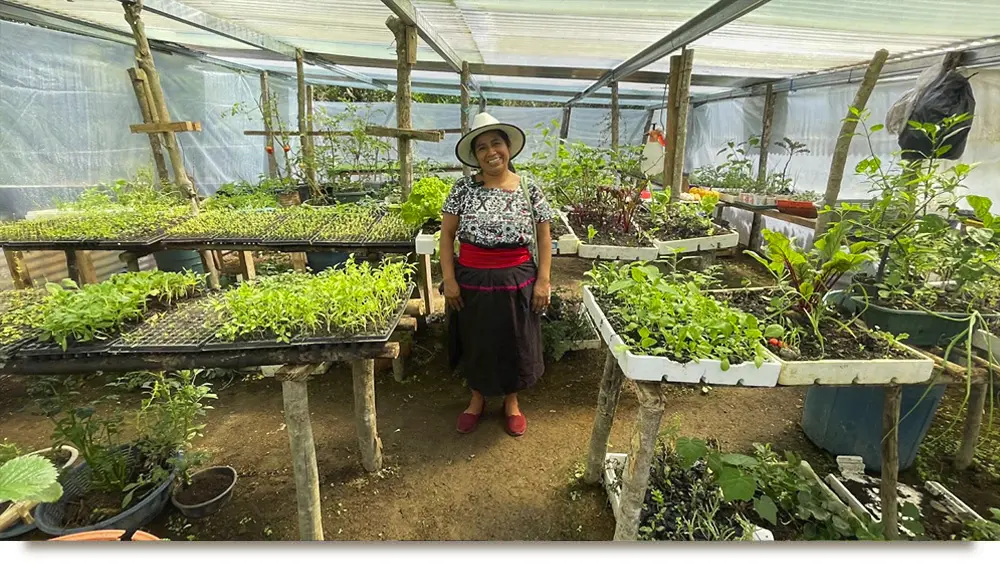
Carmelina in her Seed Nursery in Santa Maria Visitacion
3.) Our nurseries keep thousands of seedlings in process
Behind every new garden is a seedling, and our three piloneras (community nurseries) in Chocolá, Pochol and Santa María Visitación never stop. In a single week at the start of the season, the Chocolá and Pochol nurseries sent nearly 2,400 seedlings and 30 fruit trees out to families, from hierba mora and amaranth to chard, tomatoes and peppers.
We're also saving our own seed. Our team harvests seed from chile cobán, jalapeño, squash and tomato, with each tomato yielding around 100 good seeds, so families can keep planting without buying inputs. Agronomy intern Blanca is running trials on natural rooting agents and substrates to prevent damping-off, a fungal disease that can wipe out young seedlings in wet weather.
When heavy rains threatened the trays, the team repaired roofs and covers and adjusted watering cell by cell. In Chocolá, they connected a 1,000-liter tank to catch rainwater from the roof for the “dry season.”
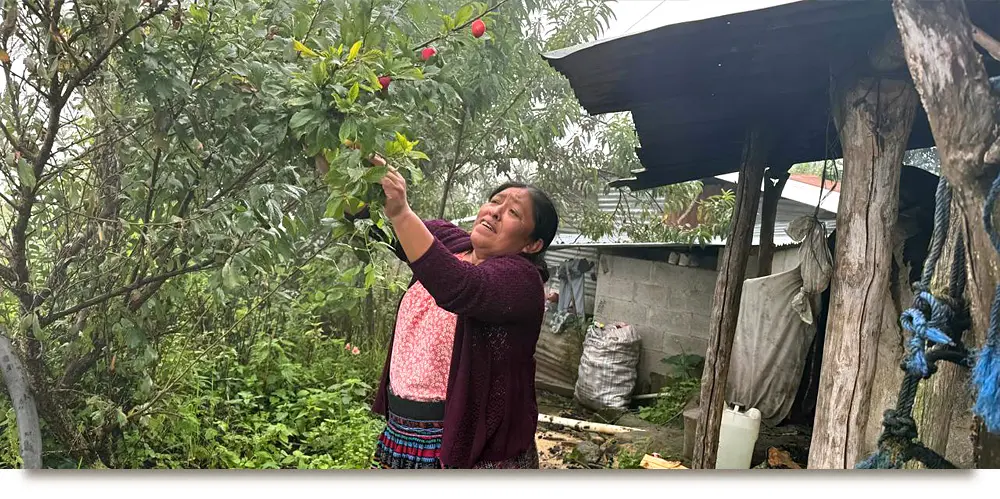
A new program member in Santa Maria Visitacion picking peppers
4.) New families, shared land and a growing circle
This season we welcomed new families across 7 communities. Our program is open to everyone, regardless of income, and no one is turned away for lack of space: when a yard is small and for some families living in rentals, we plant in reused basins, buckets, and bags to maximize space and keep gardens more mobile in case of a move.
Some of the most inspiring moments came from neighbors helping neighbors. Doña Herencia lent part of her land so Doña Manuela could start her own garden. In the highlands, Doña Lilian opened her plot to three more women, turning one garden into a small community hub.
We're also growing through our partnership with Xela AID, an organization that runs a clinic and health and nutrition programs in the western highlands. Together we're bringing home gardens to families in San Martín Sacatepéquez, linking their clinic visits with what they grow at home. Back on the coast, Doña María compared two planting methods side by side and saw that montículo beds, raised mounds layered with organic matter, grew faster than traditional rows with the same compost.
5.) Growing the next generation of extensionists, in the families' own languages
In San Martín Sacatepéquez, our newest extensionist trainee, Martín, is learning on the job, and he's already leading. When Doña Juana and Doña Juana Paulina asked to speak in their mother tongue, Martín led the visit in Mam, explaining planting distances and nutrition so nothing was lost in translation. In Xejuyup, Don Julio interpreted a fruit-tree workshop into K'iche' so every question could be answered.
Our gardens are about health as much as harvest. Martín now gives talks on the food pyramid, and our team shares the First 1,000 Days of Life, the window from pregnancy to age two when nutrition matters most. One grandmother told us she had never heard of it and would share it with her daughter, who had just given birth.
Students are stepping up across the program, too. In Pasac, intern Blanca led a seed-selection workshop for 14 families, alongside a session on the First 1,000 Days and breastfeeding.
Thank you for growing with us
None of this happens without the families who open their homes to us, the extensionists and nursery growers who show up rain or shine, the students who bring fresh energy, and the supporters like you, who make it all possible. Every seedling you help us grow becomes a meal, a market sale, or a lesson shared with a neighbor.
There's a lot more ahead: a new Field Day in the Bocacosta, oyster mushroom projects, and more families joining every week. Stay with us, share this story, and help us plant next season's Seeds for the Future.
About Roots of Success: Each month, this series is built from field reports documenting the work of our Guatemala Field Team and Program members. Vivien Varga, Marketing Manager, compiled this edition from reports written by Moisés Pastor Morales, Program & Data Manager.