Planting Seeds, Finding Connection: A Journey Through Guatemala
By Leilani Yats - 11/05/2026
Traveling with our Field Team, visiting families, and seeing their gardens firsthand is one of my favorite parts of being Executive Director of Seeds for a Future.
It's one thing to read about the work happening in our communities each week. It's another to sit with a family, walk through their garden, and see the pride they take in growing food for themselves. These visits remind me that our work is about so much more than gardens. It's about relationships, confidence, and the opportunity for families to shape a healthier future.
After a recent trip, I want to share a few of the people, places, and moments that have stayed with me, and invite you to consider joining us someday.
A Rainstorm in Santa Bárbara, Suchitepéquez
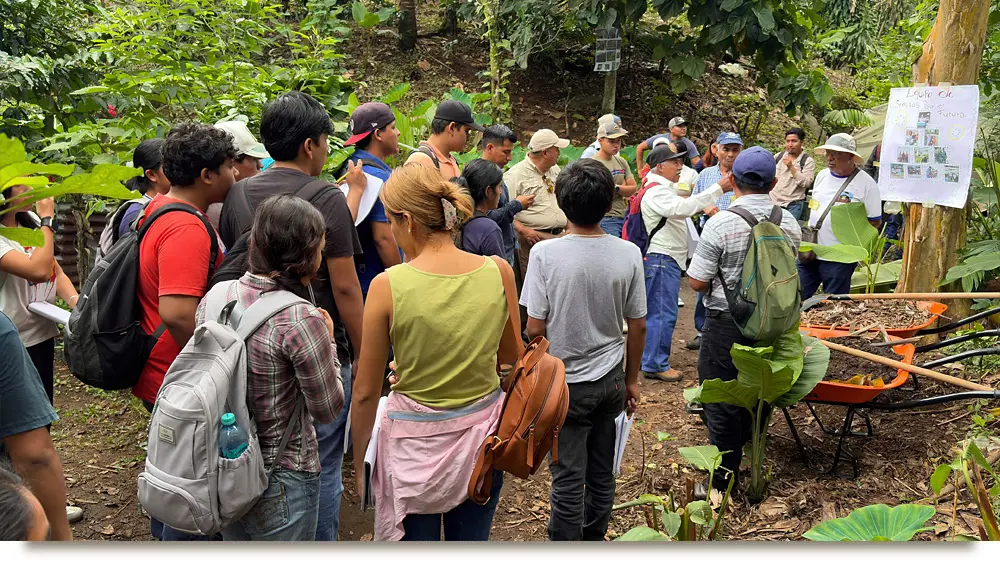
On October 2, 38 people gathered at Program Member Don Clemente Álvarez's land in Chocolá for a community Field Day.
Students, participating families, community representatives, and our partners rotated through five hands-on stations: Biodiversity, Cropping Systems, Fruit and Timber Trees, Integrated Home Gardens, and Microorganism solutions for soil regeneration.
The team had been preparing for weeks, from finishing a tilapia pond to brewing a batch of Microorganism solution with cane sugar, forest soil, and potato. Student intern Brayan's station showed how chili, garlic, and onion make a natural pest repellent with no chemical residue.
The day closed with tortillas, chicken, and a refreshing moringa drink, rich in iron and vitamins. Families who completed a full year in our program received diplomas, and participants Micaela and Manuela shared how the project has changed their communities. Our interns Blanca and Justin are already planning a Field Day for next month.
Why This Work Matters to Me
In early 2023, I first learned about Seeds for a Future through a friend on the team. I was struck by how the organization works alongside families in rural communities, taking a long-term approach rather than offering quick fixes. When a role opened that spring, I joined, and in 2024 I became Executive Director.
Having lived in Guatemala for nearly 10 years, visiting families is a regular part of my work. Still, every visit reminds me why this approach matters. It's about sharing knowledge and tools families can carry forward, so they can grow their own food and make decisions about their family's health in the short run and the long term. For example, in Santa Bárbara, the children are already learning alongside their parents.
What stays with me most is the consistency. Our team shows up week after week, building relationships that allow confidence, trust, and healthier food to grow together.
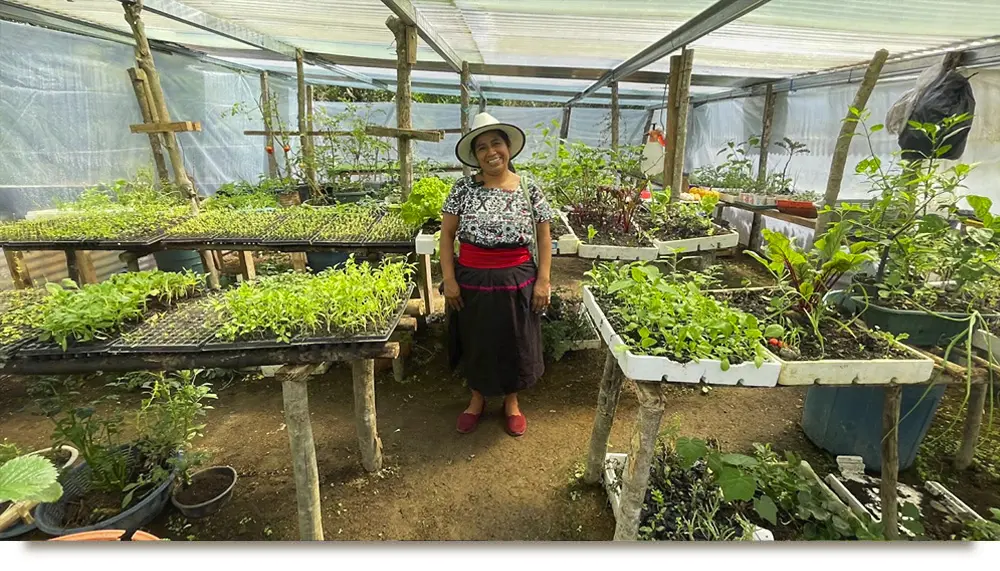
Carmelina in her Seed Nursery in Santa Maria Visitacion
Easier Than You'd Think
Our trips start in Antigua, where several of us live, and over a week we visit as many of the communities we serve as possible. This time, our group was made up of Jim, our soil scientist, agronomist, and program mentor; Veronika, a volunteer and expert in compost, soil, and plants; Vivien, our communications manager; and, visiting from Michigan, our newest teammate, Marty. Although we meet with the Field Team virtually every Friday, nothing beats catching up in person.
We visited the community garden in Patulul, met families in Santa Bárbara, spent two days in Chocolá visiting Boca Costa communities, and finished in Santa María Visitación, near Lake Atitlán. The days have an easy rhythm: breakfast at our homestay, time on the road visiting families, lunch at a local comedor to learn program updates, and dinner where we share our standout moments of the day.
Traveling with our local team makes it comfortable and rewarding: we follow their guidance, plan our routes carefully, and have support with logistics from start to finish. The biggest decisions most days are where to stop for water or a restroom when the moment calls for it.
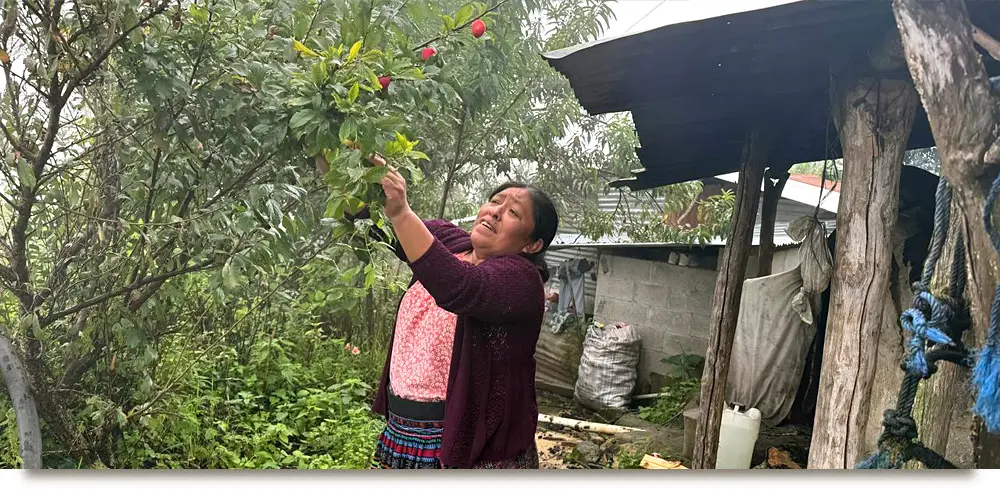
A new program member in Santa Maria Visitacion picking peppers
Where It Begins: The Seedling Nursery in Chocolá
Every family garden starts here. The team harvests and propagates its own seeds, which keeps costs down and allows us to trace the origins of every seedling. They also test fermented solutions that bring beneficial microbes to the soil and mix in compost so seedlings thrive once transplanted.
In the Boca Costa communities, we were welcomed with open arms, as always. These families embraced a new way of growing food, even with a steep learning curve, and now they're seeing the rewards in their gardens, their kitchens, and their confidence in caring for their families' health.
A Walking Food Forest in Santa María Visitación
Near Lake Atitlán, Santa María Visitación is a farming community where many families grow produce for sale and export. They know their soil well, and they know firsthand how chemicals can harm their bodies and land.
One visit stays with me. We hiked up to a woman's home on a steep hillside, where every step of her outdoor staircase was lined with baskets of vegetables, pepper bushes, and fruit trees. She had built a walking food forest around her home. She was especially proud of her chile verde, the green peppers the region is famous for, and sent us home with a full bag for salsa.
The Heart of the Trip
Visit after visit, these families share reminders that having little doesn't mean going without. They have a deep love for one another, a strong sense of community, and a resilience that shines when given the opportunity.
We met a woman who once believed there was no opportunity for her to find work. After a year in our program, she now sells her extra harvest, invests those earnings in other products to sell, and feeds her family with greater ease. She shared tears of gratitude as she told her story, and we shared tears of joy.
Hospitality shows up in simple ways: squash simmered in sugar water, or a refresco (drink) made with freshly muddled fruit. These families just want to welcome their guests and share their stories.
Come Sit on the Porch
Weeks later now, I keep coming back to that porch in Santa Bárbara: rain pouring down, warm bread and laughter passing between old friends and new, and a family proud to share what they'd grown.
That's what this work feels like.
My hope is that one day soon, you’ll join us on the porch so you can meet the families you support, share a meal, and experience firsthand the warmth and resilience that make this work so meaningful.